

Short answer
An apostille is an authentication that allows any government document to be used in a foreign country that has also signed onto the Apostille Treaty, also called the Apostille Convention. Yes they are annoying to get, depending on the jurisdiction, but before apostilles the authentication process was actually much much worse.
Long answer
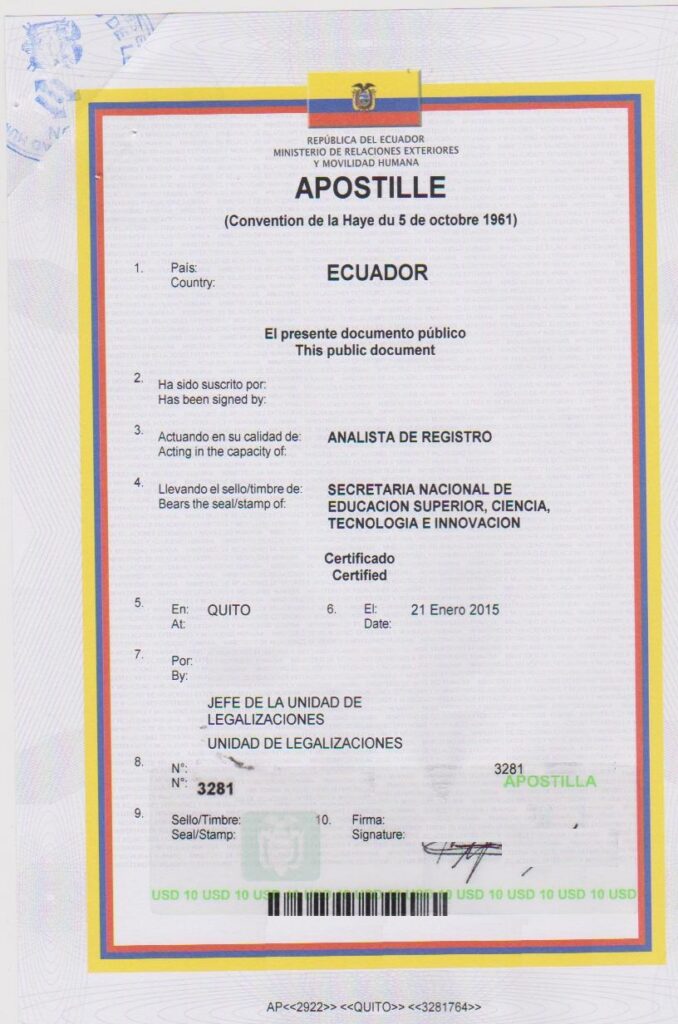
Why does my document need to be apostilled? Well, let’s first answer this question what is an apostille? An apostille is an authentication of an official’s signature on a public (government) document for use in another country because said other country cannot simply suppose any foreign document given to them to be authentic.
Now let’s examine how this authentication is actually done and what it entails.
All public documents generally bear the signature of some public official: maybe a judge, maybe a state prosecutor, maybe a notary, maybe a senator, maybe the director of some government department or some undersecretary. The reality is, the signatures on most documents you will even need to get are simply that of functionaries that are certainly important for the wheels of the bureaucratic state to turn but nobody you ever really need to concern yourself with. To give an example, the signature that adorns the FBI Background Checks a lot of our clients get is that of the FBI’s Biometrics Service’s Section Chief, itself part of the Criminal Justice Information Services Division of the agency… riveting right? Nevertheless, an FBI background check could not be considered an authentic public document without bearing the signature of this official on it.
Now what does an apostille do? An apostille authenticates that signature as authentic. In other words, in the act of apostilling a background check (or any other public document) the state is saying, “Yes, this guy really works for us and really signed this document.”
It is important to note that the apostille authenticates this signature but nothing else. It does not in any way authenticate the contents of the document. In fact, documents occasionally do have errors on them. The FBI Background Checks for instance, if they show any arrest history, are veritable data dumps: anything the arresting police department wrote down goes in there. In our work we’ve seen misspelled names, incorrect birthdays, you name it. All of this stuff is still perfectly apostille-able and indeed can be turned over to other governments and used in other countries because again, at no point is the United States saying, “Yes, the contents of this document are super duper correct” they are merely saying, “Yes, that is really the signature of this official that we have on file.”
Odd, right?

Why do all these documents need apostilles?
With a few exceptions, every public document needs to be apostilled for use abroad because another country cannot just take anybody at their word that this document really comes from the country it claims to come from. That would entail simply trusting some random person, say, asking for residency (“Yes, I swear I’m not a criminal!”). And that’s just not happening.
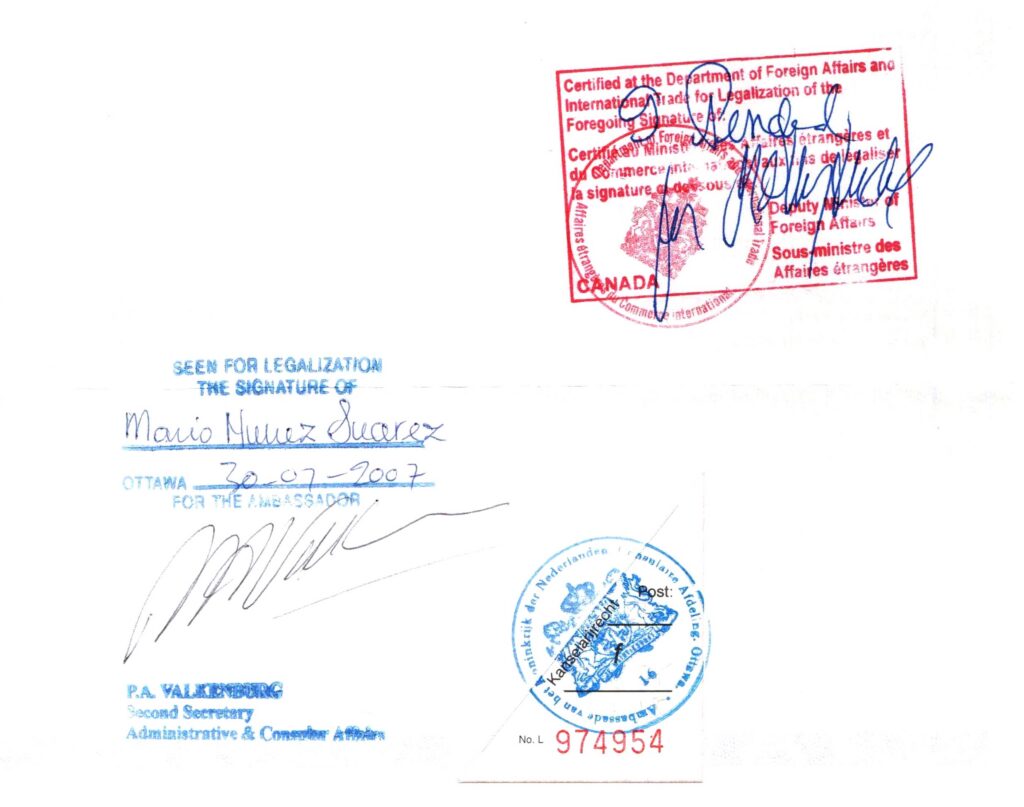
To be sure, the apostille itself is a big improvement. What the world had prior to the 1960s was a process of legalization. It is a process that many countries still use, as not every country is a member of the Apostille Treaty, though over the decades more and more have signed on. This legalization process can be extremely lengthy because it involves an entire chain of signatures. A simple case goes roughly as follows:
- Obtain public document signed by public official.
- Authenticate the signature of said official in the equivalent of the ministry of foreign affairs in the country of origin. During this process an official working for the ministry of foreign affairs signs the document, thereby authenticating the signature for step #1.
- Authenticate the signature of the official from the ministry of foreign affairs at the embassy of the destination country in the country of origin (e.g., for an American document, authenticate a document for Spain at the Spanish embassy in the United States). This authenticates the signature of the official for step #2.
This involved a lot of steps, each step authenticating the prior step, and in many instances involved even more steps than the ones listed above. Sometimes department subheads have to themselves be authenticated by their superiors and only then can the central government’s ministry of foreign affairs authenticate the document. To simplify this mess, a lot of countries got together and created the one-step process we know today as an apostille.

Why is it called an Apostille of the Hague? Is that different from a normal apostille
There is no difference. The Apostille Treaty was created and initially signed at the Hague in the Netherlands. That’s it.
Why aren’t all countries signatories to the Apostille Treaty?
Because in order to sign on they have to have basic security standards and security infrastructure to actually make the authentication work. Otherwise, fraud can increase. Remember, the apostille replaces a multi-step process involving a chain of authentications, each authenticating the last step, with a simple one-stop authentication.
What exactly those standards might be not particularly relevant here but suffice it to say that in, say, a developing nation, it’s possible that if they were to join the apostille treaty, fraud could shoot up quite a lot. In fact in the past 20 years a lot of developing nations have joined the treaty as they invested in digital infrastructure, QR-code-like verification for documents and the like.
A lot of US documents seem to require US State Apostilles. Why?
This happens in the US and Canada a lot because a lot of essential documents come from individual states or provinces, not the federal government.
Remember, an apostille is an authentication of a public official’s signature. So the apostille must ultimately come from the same jurisdiction that issued the document. In the case of a US State document the state in question has to apostille it: a California official is not a federal official —they work for California. Likewise, an FBI official is not a California official —they work for the federal government.
This does admittedly create the odd situation where California didn’t sign the Apostille Treaty, the United States did, and yet California is required to issue apostilles. That’s just how the world works though.
I’m being required to apostille a private document
This can happen. Private (that is non-government) documents are sometimes required to be apostilled. This often occurs because one type of document is public in the country requesting it but not in the country of origin. Tax returns are a common one we encounter in our work. Tax returns are public documents in Spain, so Spain requires apostilles, but they are not public documents in many other places.
How does this work then, as private documents don’t bear the signature of any public official?
In this case, the first step is making the private document a public document by getting a public official to sign it. This is generally done with a notarization. In this case the notary signs the document, and the notary is a public official! Thus, the apostille authenticates the signature of the notary.
And there you have it, apostilles in a nutshell.